Xiamen Tmax Battery Equipments Limited was set up as a manufacturer in 1995, dealing with Laboratory equipments, technology, etc. We have total manufacturing facilities of around 2, 000 square meters and more than 100 staff. Owning a group of experie-nced engineers and staffs, we can bring you not only reliable products and technology, but also excellent services and real value you will expect and enjoy.
Microwave Sintering Furnace: Advanced High-Efficiency Thermal Processing Technology for Modern Material Engineering
A Microwave Sintering Furnace is an innovative high-temperature processing system that employs microwave energy as the primary heating mechanism for the densification and microstructural development of ceramic, metallic, and composite materials. Compared with traditional resistance-heated or gas-fired furnaces, microwave sintering technology offers unique advantages—including volumetric heating, rapid thermal response, improved energy efficiency, and enhanced material performance—making it an increasingly important tool in advanced manufacturing and materials research.
The fundamental principle behind the microwave sintering furnace is the direct interaction between microwave electromagnetic waves and the material being processed. When exposed to microwave irradiation, polar molecules and ions within the material oscillate rapidly, generating heat internally through dielectric and magnetic losses. This volumetric heating effect enables the entire body of the material to heat uniformly, drastically reducing thermal gradients and accelerating sintering kinetics. As a result, microwaves can achieve faster densification and more controlled microstructure formation compared with conventional external heating methods.
A typical microwave sintering furnace consists of several core components: a microwave generator (magnetron or solid-state source), a waveguide distribution network, a microwave-transparent sintering chamber, thermal insulation, and a temperature control system. Depending on the application, susceptors—highly microwave-absorbent materials such as silicon carbide or graphite—may be incorporated to assist heating at the initial stage or to improve temperature uniformity. The chamber is engineered to withstand high temperatures while ensuring stable and efficient microwave propagation.
One of the most significant benefits of microwave sintering is its rapid heating capability. Many materials can be heated at rates exceeding 50–100 °C per minute, dramatically reducing the total sintering time. This not only increases production throughput but also minimizes grain growth, resulting in finer microstructures and improved mechanical properties. Additionally, microwave sintering typically consumes 30–50% less energy than traditional furnaces due to its direct heating mechanism and minimal thermal mass.
The microwave sintering furnace is widely utilized across various material processing fields. In advanced ceramics, it is used for sintering alumina, zirconia, silicon carbide, and functional ceramics used in electronic components. The uniform heating promotes higher density, improved dielectric properties, and improved mechanical strength. In powder metallurgy, microwave sintering enables the efficient production of iron-based alloys, hard metals, stainless steels, and magnetic materials with enhanced density and reduced impurity diffusion. The furnace is also applied in the fabrication of catalysts, nanomaterials, battery materials, and composite structures that benefit from controlled heating patterns.
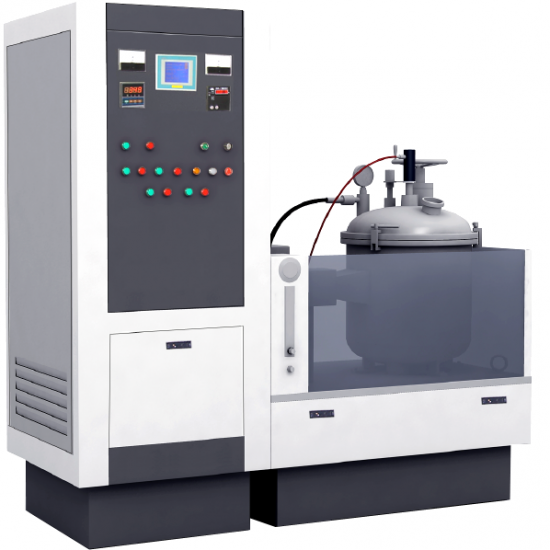
Microwave Sintering Furnace
Modern microwave sintering furnaces feature sophisticated atmosphere control systems, allowing sintering under air, inert gas, vacuum, or reducing environments. This expands the range of materials that can be processed and ensures precise control over chemical reactions during sintering. Advanced units incorporate programmable logic controllers (PLC), multi-point temperature monitoring, and closed-loop microwave power regulation to maintain stable sintering profiles. Hybrid heating systems—combining microwave energy with resistance or infrared heating—are also becoming common, enabling operating temperatures above 1600 °C and improved flexibility for materials with variable microwave absorbance.
Safety and reliability are central considerations in the design of microwave sintering furnaces. Shielding structures prevent microwave leakage, while automatic interlocks, over-temperature protection, and real-time diagnostics ensure safe operation. Robust refractory lining materials maintain structural integrity even under prolonged high-temperature cycles, making the furnace suitable for both research laboratories and industrial-scale production environments.
In summary, the Microwave Sintering Furnace represents a transformative advancement in thermal processing technology. Its advantages of volumetric heating, fast sintering rates, superior energy efficiency, and enhanced material performance have positioned it as a critical tool in modern materials science and manufacturing. As the demand for high-performance ceramics, metals, and functional materials continues to rise, microwave sintering technology will play an increasingly vital role in the development of next-generation engineering solutions.