Xiamen Tmax Battery Equipments Limited was set up as a manufacturer in 1995, dealing with Laboratory equipments, technology, etc. We have total manufacturing facilities of around 2, 000 square meters and more than 100 staff. Owning a group of experie-nced engineers and staffs, we can bring you not only reliable products and technology, but also excellent services and real value you will expect and enjoy.
Microwave Vacuum Sintering Furnace: Advanced Mechanical Equipment for High-Precision Material Processing
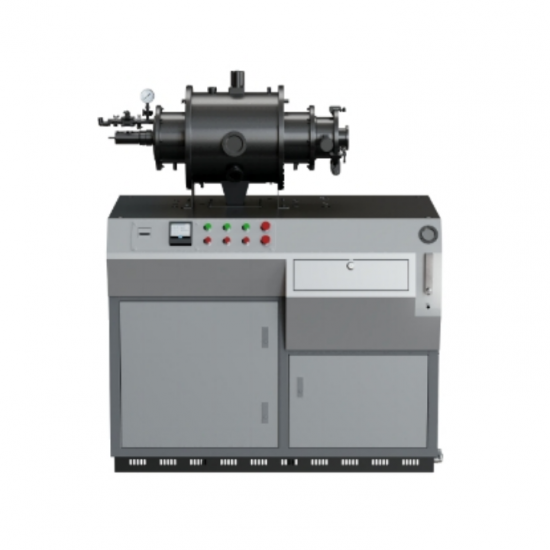
The Microwave vacuum sintering furnace is one of the most advanced and efficient pieces of mechanical equipment used in modern materials engineering. By combining microwave heating technology with a controlled vacuum environment, this furnace enables precise, energy-efficient, and high-temperature processing of metals, ceramics, composites, and high-performance powders. As industries continue to demand materials with superior mechanical strength, thermal stability, and microstructural uniformity, microwave vacuum sintering technology has become an essential solution for research laboratories, production facilities, and advanced manufacturing sectors.
1. Working Principle of the Microwave Vacuum Sintering Furnace
Unlike conventional furnaces that rely on external heat conduction, a Microwave vacuum sintering furnace uses microwave radiation—typically 2.45 GHz—to directly heat the internal structure of the material. This volumetric heating significantly accelerates diffusion and promotes uniform temperature distribution.
Key Heating Mechanisms
* Microwave Absorption
Materials such as ceramics, carbon, and metal powders absorb microwaves and convert electromagnetic energy directly into heat.
* Volumetric Heating
Heating occurs throughout the material rather than from the surface inward, reducing thermal gradients and minimizing deformation or cracking.
* Vacuum Environment
The integrated vacuum chamber removes oxygen, moisture, and impurities, preventing oxidation, contamination, and undesired reactions during sintering.
* Controlled Atmosphere Capability
Inert gases such as argon, nitrogen, or forming gas may be introduced to optimize specific sintering reactions.
This combination of microwave and vacuum technology allows materials to be processed at lower temperatures and shorter durations compared to traditional electric or resistance furnaces.
2. Structural Components of Microwave Vacuum Sintering Equipment
A standard Microwave vacuum sintering furnace incorporates several precision-engineered components designed for long-term stability and high performance:
a. High-Power Microwave Generator
The magnetron or solid-state microwave source delivers stable and adjustable microwave output, allowing accurate control of heating rates and thermal profiles.
b. Vacuum Chamber
Constructed from high-temperature stainless steel or refractory metals, the vacuum chamber withstands temperatures exceeding 1600–2000°C depending on the model.
c. Microwave Cavity and Waveguide System
These components distribute microwave energy evenly within the furnace, ensuring uniform irradiation across the material surface and core.
d. Thermal Insulation System
Advanced ceramic fiber or graphite composite insulation reduces heat loss and stabilizes thermal uniformity.
e. Temperature Measurement and Control System
Infrared pyrometers, thermocouples, and real-time feedback controllers provide precise temperature management throughout the sintering cycle.
f. Vacuum Pumping System
Mechanical pumps, Roots pumps, and diffusion or turbomolecular pumps achieve low-pressure conditions necessary for high-purity sintering.
Together, these components enable stable and highly efficient material processing.
Sintering Tube Furnace
3. Advantages of the Microwave Vacuum Sintering Furnace
a. Fast Heating and Shorter Sintering Cycles
Microwave heating can achieve extremely rapid temperature increases—often several times faster than conventional furnaces—resulting in higher throughput and lower energy consumption.
b. Reduced Sintering Temperature
Due to microwave-enhanced diffusion, materials can achieve full densification at temperatures 100–300°C lower than traditional furnaces.
c. Improved Material Quality
Uniform heating minimizes grain growth, cracking, and thermal stress, leading to superior mechanical and microstructural properties.
d. High Purity Processing
Vacuum and controlled atmospheres prevent oxidation, carbonization, and contamination.
e. Energy Efficiency
Direct heating of materials reduces thermal loss and cuts power consumption significantly.
f. Compatibility with a Wide Range of Materials
From ceramic matrix composites and tungsten carbide to battery powders and technical ceramics, the furnace supports diverse sintering applications.
4. Industrial Applications of Microwave Vacuum Sintering Technology
a. Advanced Ceramics Manufacturing
High-performance ceramics such as alumina, zirconia, silicon carbide, and boron carbide achieve improved density and mechanical strength through microwave vacuum sintering.
b. Powder Metallurgy
Metal powders used in aerospace, tooling, and automotive parts benefit from reduced sintering temperature and finer microstructures.
c. Hard Metals and Cutting Tools
Cobalt-bonded tungsten carbide and other hard alloys can be sintered rapidly without grain coarsening.
d. Additive Manufacturing (3D Printing) Post-Processing
Metal and ceramic 3D-printed parts often require vacuum sintering to enhance density and final mechanical properties.
e. Carbon and Composite Materials
Materials such as carbon foam, carbon-carbon composites, and graphite components benefit from controlled high-temperature treatment.
f. Battery and Energy Materials
Nickel, cobalt, and ceramic-based battery powders can be processed with greater purity and uniformity, supporting next-generation energy storage technologies.
5. Importance of Microwave Vacuum Sintering in Modern Manufacturing
As global industries shift toward high-strength, lightweight, and high-purity materials, microwave vacuum sintering furnaces provide unmatched advantages in precision, efficiency, and quality control. Their ability to deliver faster processing times, lower energy usage, and superior material performance positions them as essential equipment for both laboratory research and large-scale production.