Xiamen Tmax Battery Equipments Limited was set up as a manufacturer in 1995, dealing with Laboratory equipments, technology, etc. We have total manufacturing facilities of around 2, 000 square meters and more than 100 staff. Owning a group of experie-nced engineers and staffs, we can bring you not only reliable products and technology, but also excellent services and real value you will expect and enjoy.
Microwave Cracking Furnace: Advanced Thermal Decomposition Technology for Efficient Resource Conversion
A Microwave Cracking Furnace is an advanced industrial processing system designed to utilize microwave energy for the thermal cracking of complex materials. This equipment applies high-frequency electromagnetic waves to decompose chemical bonds in organic or composite feedstocks under controlled atmospheres. Compared with conventional cracking equipment that relies on external heat transfer through conduction or convection, microwave cracking introduces energy directly into the material, resulting in rapid heating, improved reaction efficiency, and enhanced product selectivity. As industries move toward more sustainable and energy-efficient processing technologies, microwave cracking furnaces are becoming essential tools in petrochemical processing, polymer waste recycling, biomass conversion, and advanced materials research.
The principle of microwave cracking is based on the interaction between microwaves and dielectric materials. When exposed to microwave energy, polar molecules and conductive particles within the feedstock rapidly oscillate, generating heat internally through dielectric loss and resistive heating. This volumetric heating mechanism enables the entire mass of material to be heated uniformly, eliminating thermal gradients typically found in traditional cracking furnaces. As a result, reaction temperatures can be achieved in significantly shorter times, often reducing processing durations by 30–60% compared with conventional methods.
A typical microwave cracking furnace is composed of several key components: a microwave generator (magnetron or solid-state source), a waveguide transmission system, a high-temperature cracking chamber, an atmosphere and pressure control system, and a multi-stage product separation unit. The cracking chamber is designed using materials that are chemically stable and transparent to microwaves, while internal susceptors such as silicon carbide or graphite may be incorporated to improve heating efficiency for low-absorption materials. Advanced thermal insulation ensures stable high-temperature operation, while real-time temperature sensors and programmable controllers guarantee precise thermal regulation throughout the cracking cycle.
One of the major advantages of a microwave cracking furnace is its significantly enhanced energy utilization. Because heat is generated directly within the material, minimal energy is wasted heating furnace components or surrounding air. This efficiency not only reduces operating costs but also supports cleaner chemical reactions, minimizing the formation of unwanted by-products. The rapid heating capability also promotes more efficient bond cleavage, leading to improved cracking performance and higher yields of desirable products such as light hydrocarbons, syngas, or carbon-rich solid residues.
Pyrolysis Tube Furnace
Microwave cracking technology is widely applied in the recycling of plastic waste, particularly in breaking down polyethylene, polypropylene, and polystyrene into valuable fuel oils and monomers. The controlled cracking environment minimizes char formation and toxic emissions, offering a cleaner alternative to traditional pyrolysis. In petrochemical applications, microwave cracking enables selective conversion of heavy oils, asphaltenes, and refinery residues into lighter fractions with improved efficiency.
In the field of biomass processing, the microwave cracking furnace is capable of converting agricultural waste, algae, and lignocellulosic materials into bio-oil, biochar, and combustible gases. The uniform heating accelerates depolymerization reactions, enhances carbonization, and supports the formation of high-surface-area carbon materials. The technology is also increasingly used for cracking electronic waste and composite materials, where its selective heating properties allow efficient separation and recovery of valuable elements.
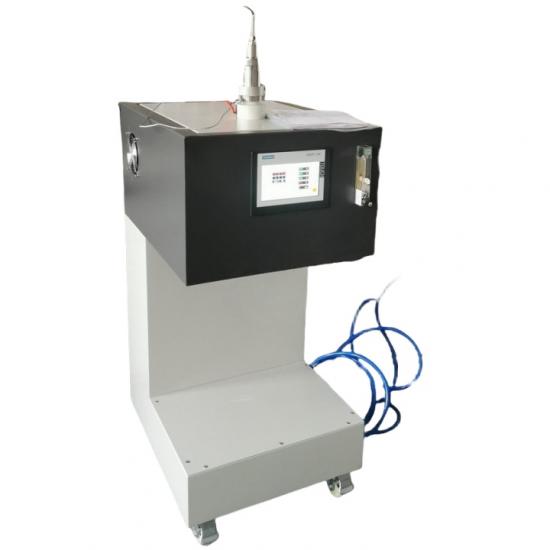
Modern microwave cracking furnaces are equipped with PLC-based automation systems, allowing precise control of microwave power, reaction temperature, gas flow, and pressure. Safety features such as microwave leakage shielding, inert gas purging, interlock mechanisms, and emergency shutdown systems ensure reliable and secure operation. Many advanced models include hybrid heating capabilities that combine microwave and traditional resistance heating to extend operating temperatures above 1200 °C, enabling cracking of more complex and heat-resistant feedstocks.
Overall, the Microwave Cracking Furnace represents a major advancement in thermal decomposition and resource recovery technology. Its rapid volumetric heating, high energy efficiency, controlled product selectivity, and broad application range make it an indispensable tool in modern industrial processing, environmental management, and material innovation. As industries continue to pursue sustainable conversion technologies, microwave cracking systems will play an increasingly important role in shaping the future of clean manufacturing and circular resource utilization.